
Stainless Steel Spill Trays
(17 Article in 17 versions)Reliable, certified, and built to last - DENIOS stainless steel spill trays give you safe control of leaks and drips. Whether in a lab, workshop, or production line, these metal trays are designed for one thing: protecting people, property, and the environment.
Engineered in Germany and manufactured under ISO 9001, every tray is precision-welded, corrosion-resistant, and leak-tested. From storing acids and alkalis to collecting machine fluids, they’re your compliant solution for everyday spill containment.
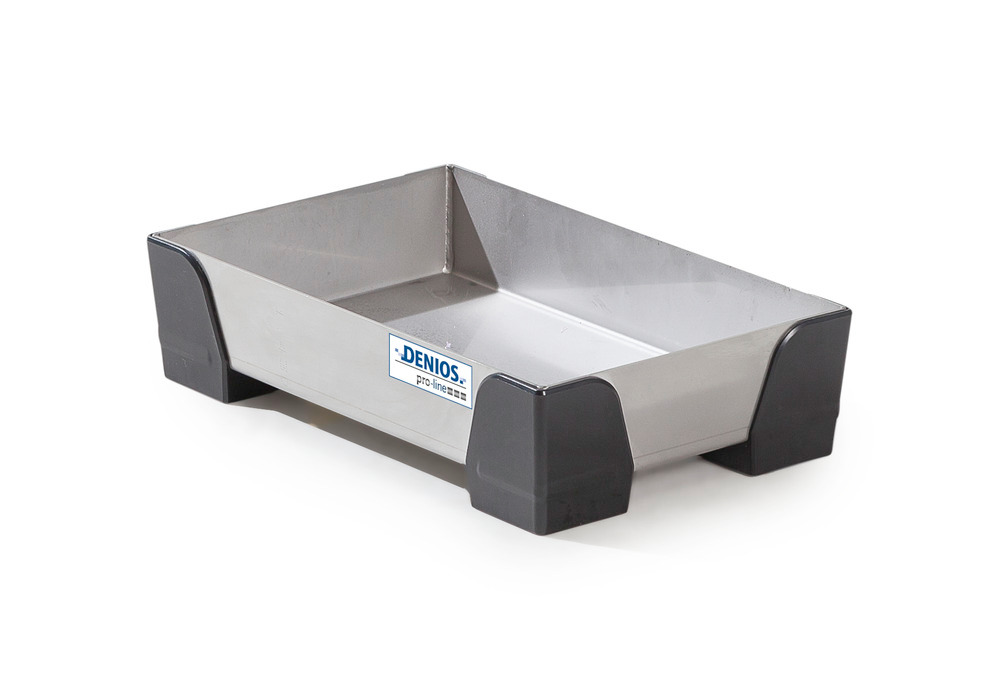
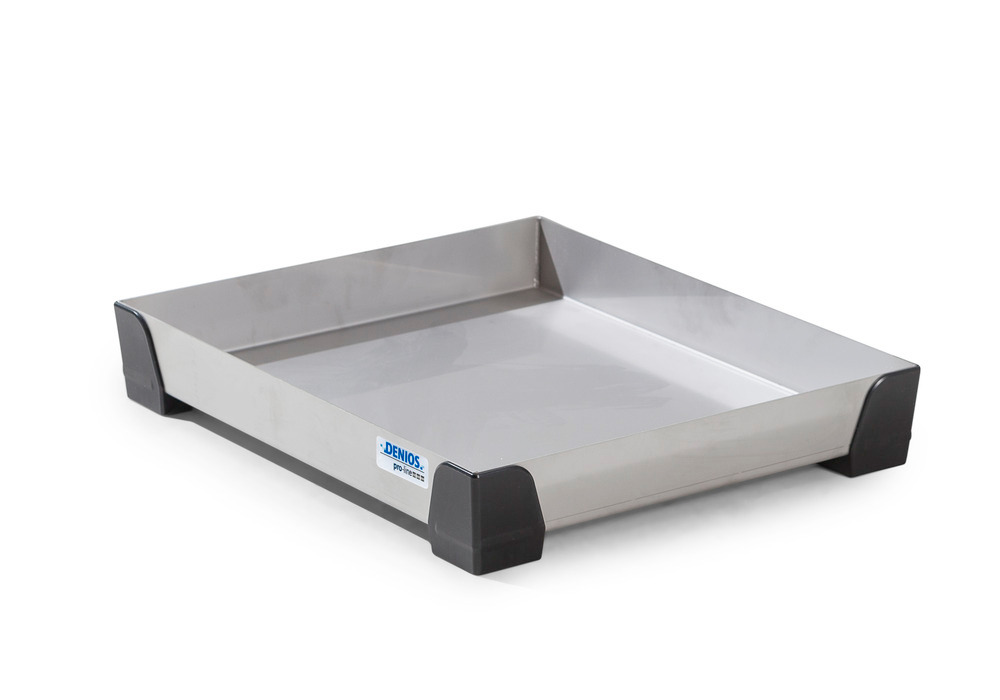
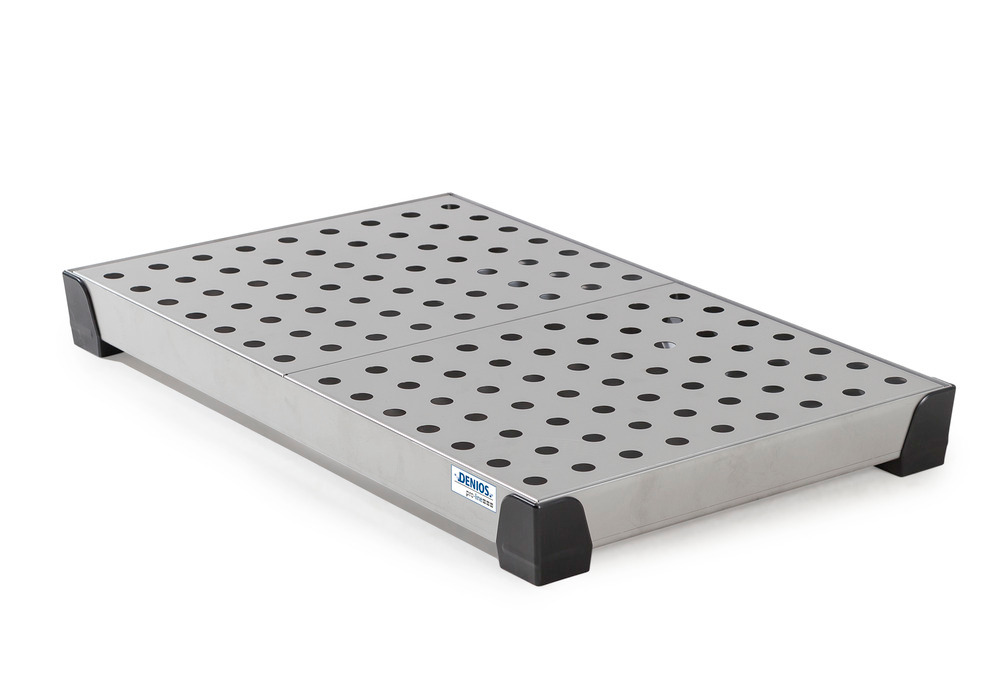
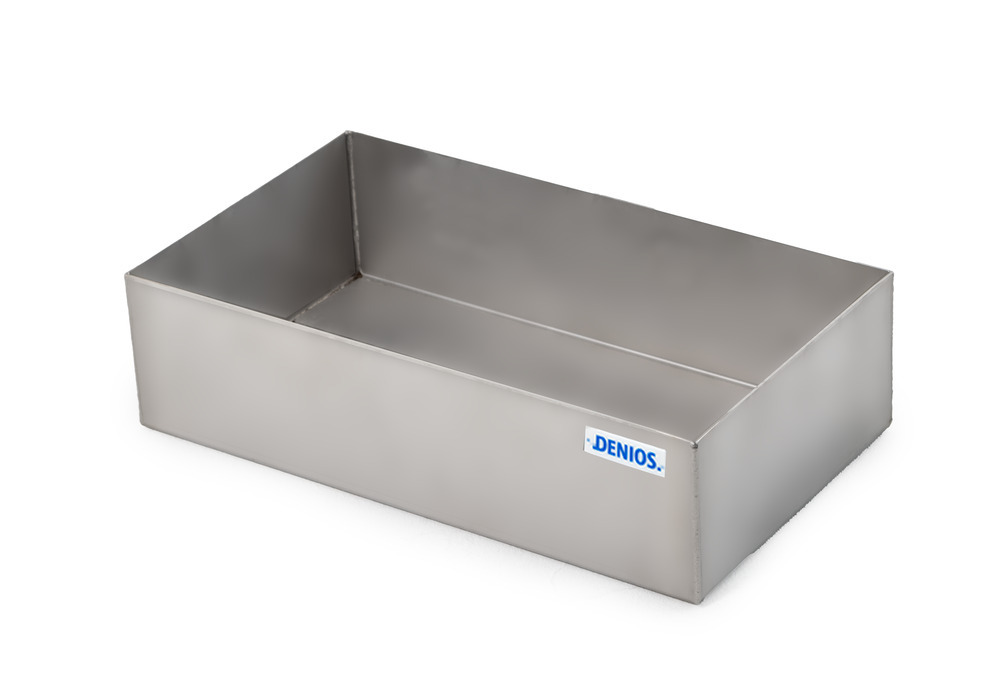
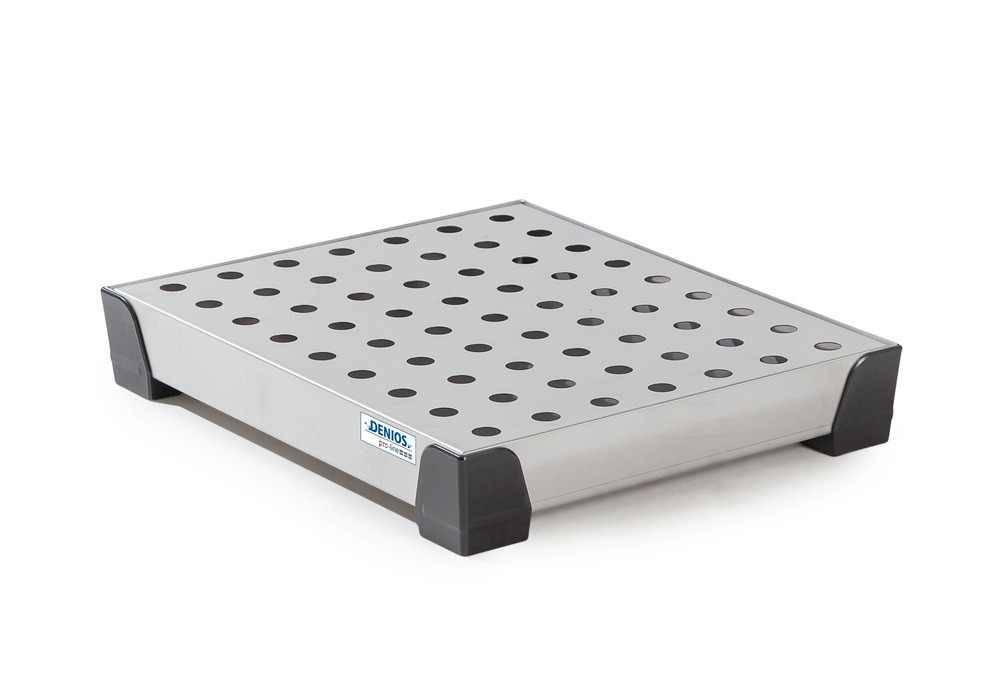
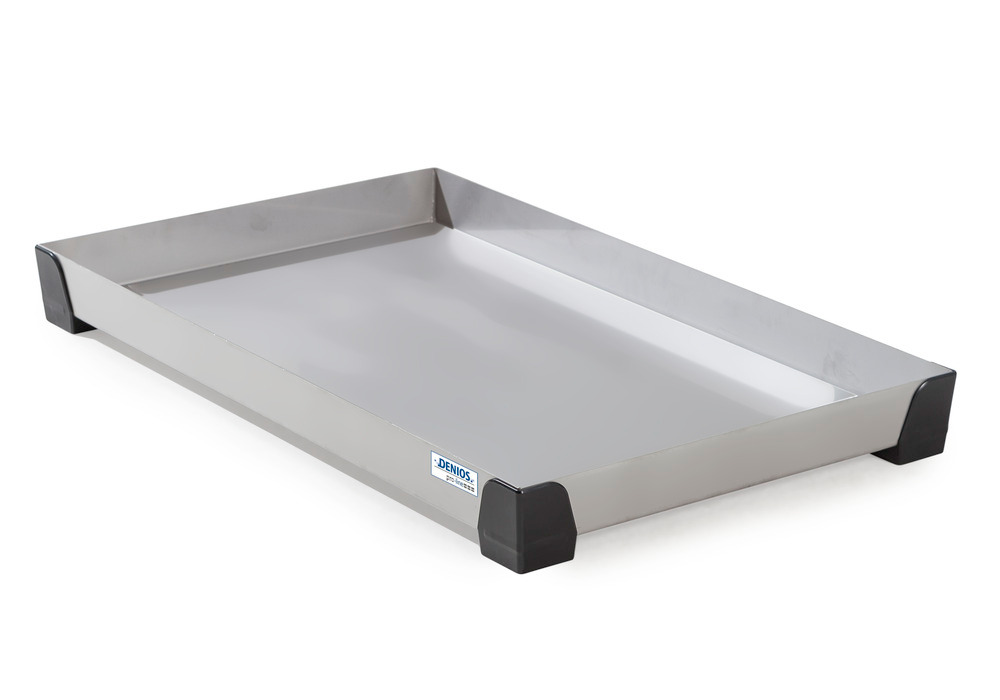
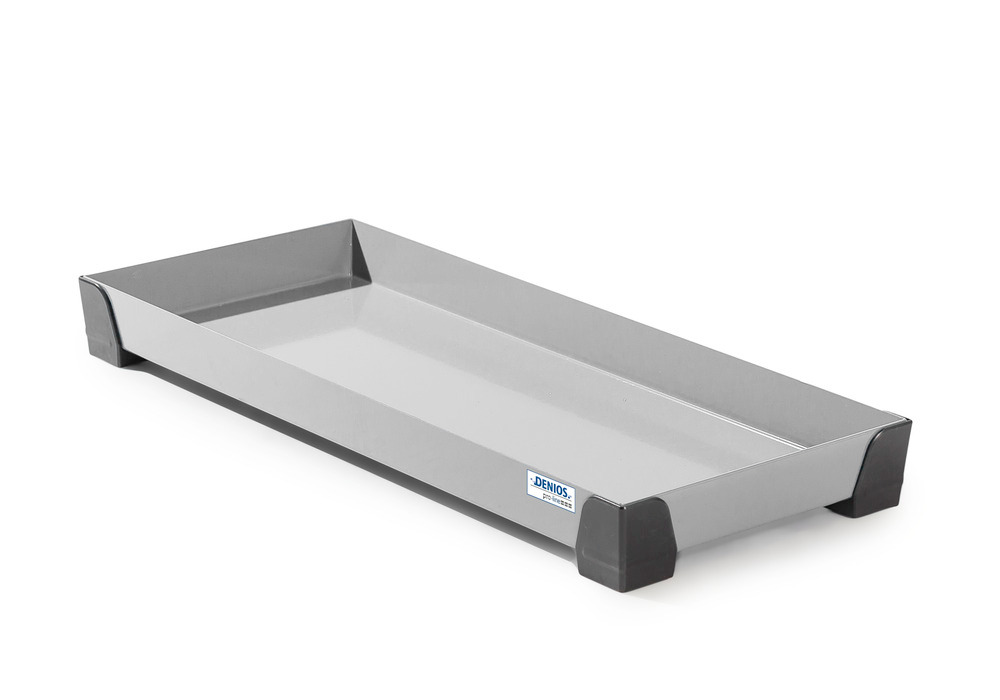
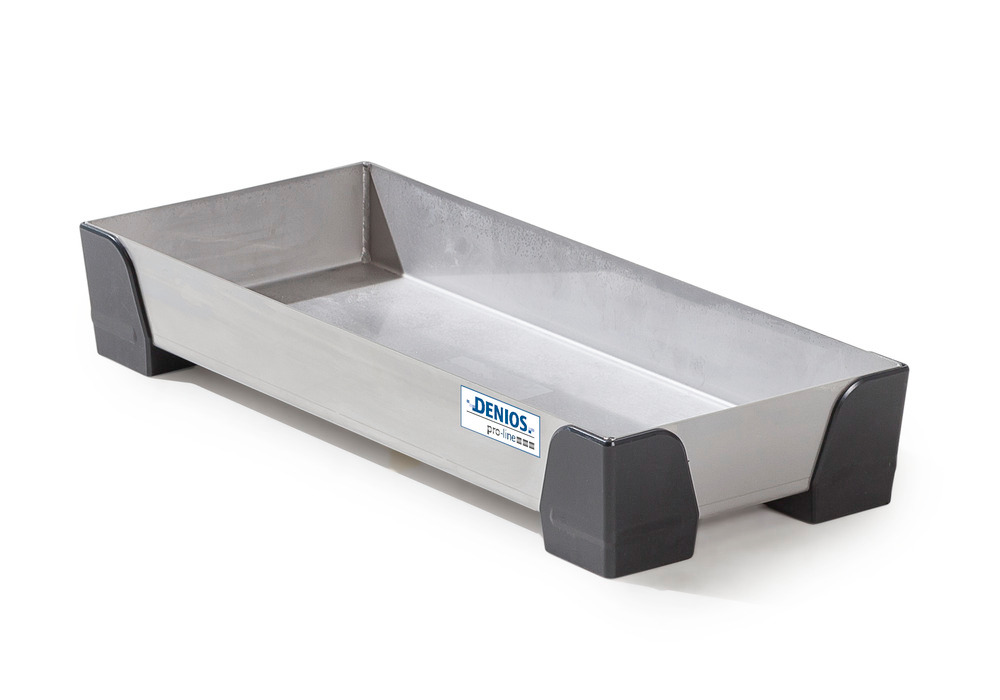
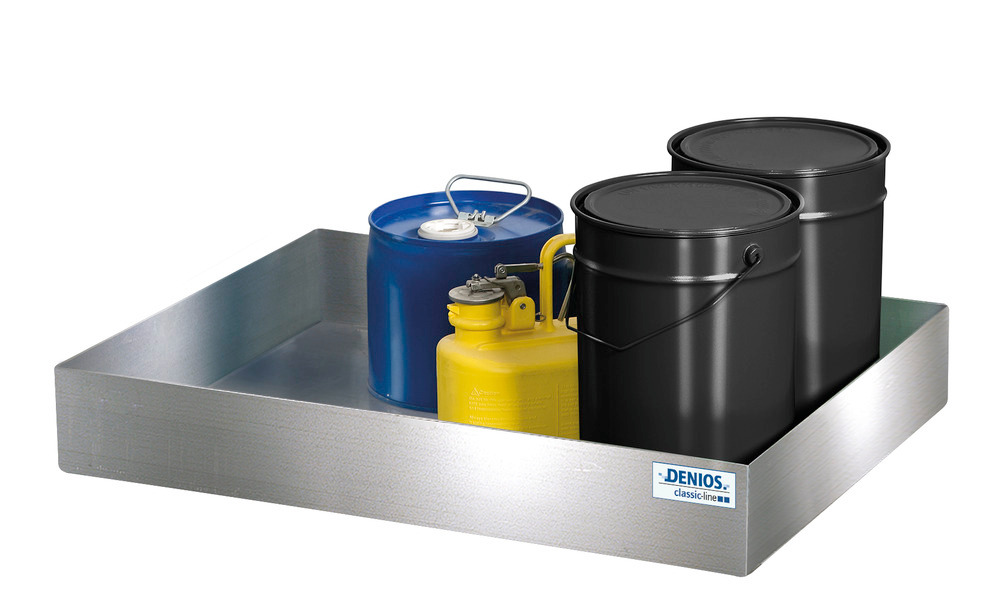
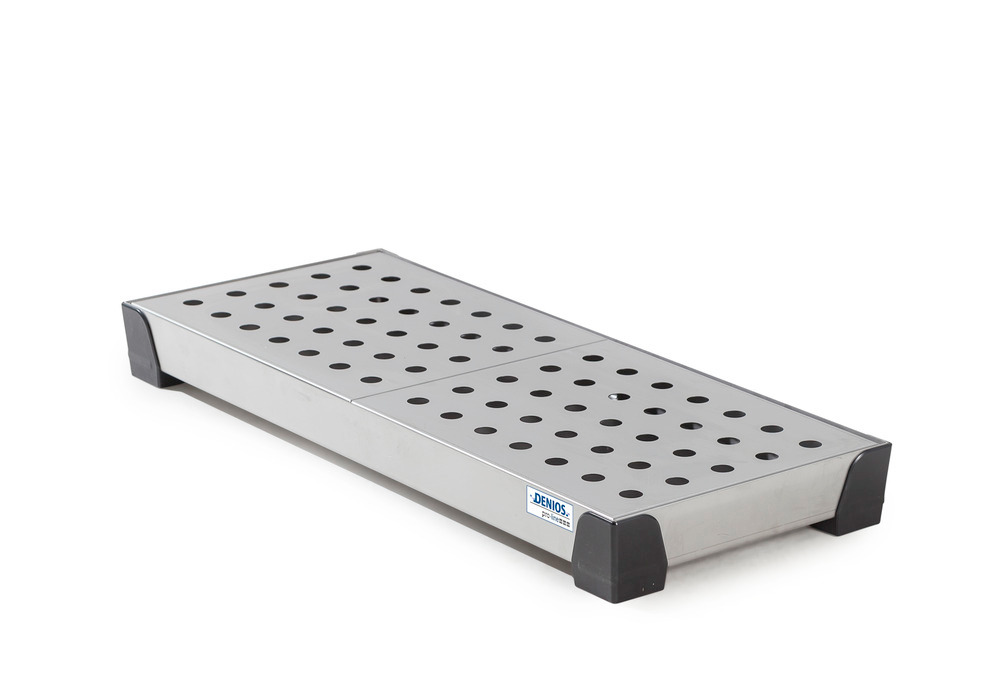
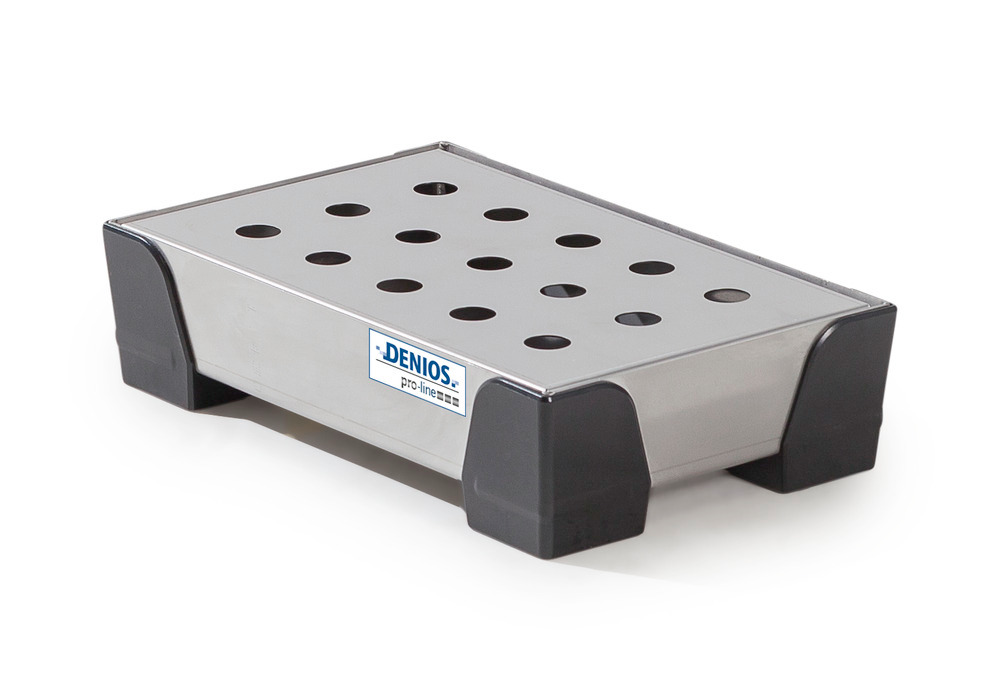
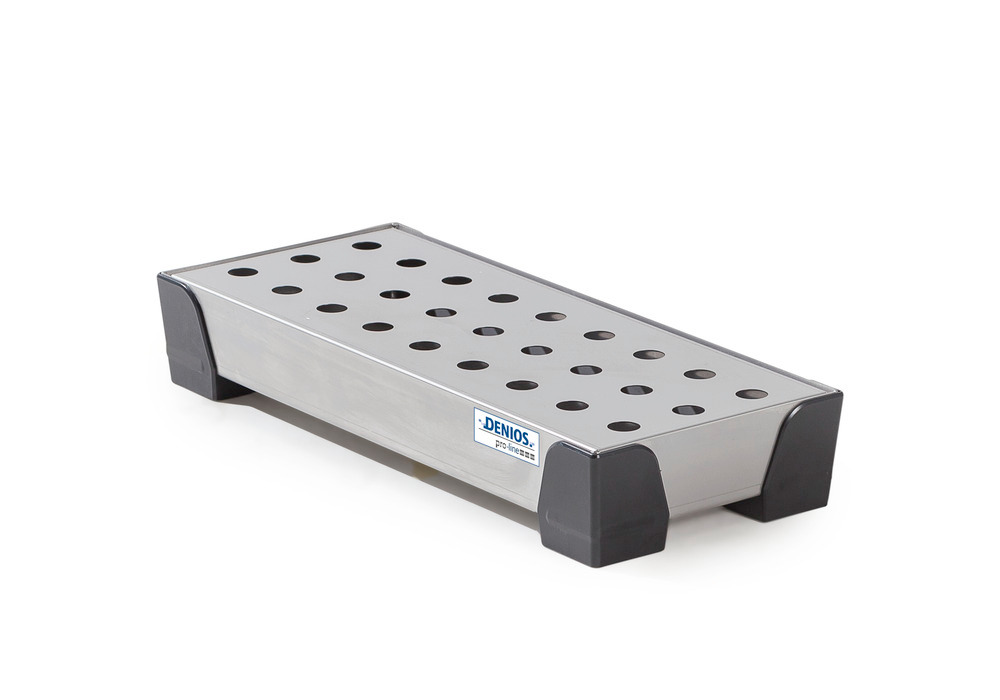

STAINLESS STEEL SPILL TRAYS FROM DENIOS
Our stainless steel drip trays are available in multiple capacities - from compact 5-litre bench units to larger 50-litre floor trays. Each one features seamless welds for durability and optional stainless-steel grids for stability.
They’re perfect for everyday spill management:
Use as a drip tray under containers, tools, or lab bottles.
Store small chemical vessels safely on workbenches.
Collect leaks in maintenance and filling areas.

Why stainless steel makes the difference
If you’re dealing with corrosive liquids, flammable solvents, or strict hygiene requirements, stainless steel simply performs better.
Corrosion resistant: Handles acids, alkalis, and solvents that damage mild steel.
Fire safe: Non-combustible and suitable for flammable media.
Hygienic surface: Smooth and easy to sterilise, ideal for laboratories and food production.
Long life: Built for years of use without degradation, rusting or warping.
Also available: Galvanised trays and plastic drip trays for less aggressive substances.

What can you store in a stainless steel spill tray?
- Acetone
- Butanol
- Butyric acid
- Chromic acid
- Acetic acid
- Ethanol
- Sodium hydroxide
- Penthanol
They’re perfect for chemical storage, laboratory processes, and small-volume spill control. For full compatibility data, see our Chemical Resistance Guide.

Designed for laboratories and clean environments
In laboratories and clean environments, precision and safety come first. DENIOS stainless steel chemical trays provide both. Compact and corrosion-proof, they’re ideal for positioning directly on benches or inside fume cupboards.
Our models with plastic feet prevent surface scratches, and optional perforated covers improve airflow and keep vessels stable. When the job’s done, the trays stack neatly to save space - a small but thoughtful design detail that technicians love.
Choosing the right stainless steel tray
Selecting the right tray depends on your liquids, storage area, and usage frequency.
Ask yourself:
What type of liquid am I storing (acid, alkali, oil, or solvent)?
How much containment volume do I need?
Is it for a bench, floor, or machine base?
Will it be used for permanent storage or daily work?
Need guidance? Our specialists can help you find the perfect stainless bunded tray or spill containment tray for your setup - fully compliant with HSE and COSHH regulations.

ADVANTAGES OF DENIOS STAINLESS STEEL SPILL TRAYS
Each DENIOS stainless steel spill tray is tested, certified, and ready to use in demanding environments.
Leak-tested and supplied with a factory certificate
Fully compliant with HSE, EA, and TRGS 510 standards
Compact and stackable for efficient storage
Fire- and corrosion-resistant
Suitable for flammable and water-hazardous liquids
CERTIFIED QUALITY AND COMPLIANCE
All DENIOS stainless steel trays are produced under ISO 9001 quality management and tested to DIBt and TRGS 510 standards. Each tray is leakproof, corrosion-resistant, and ready for inspection by HSE or Environmental Agency auditors.
For more than 30 years, DENIOS has set the benchmark in safe, compliant spill containment - protecting workplaces across the UK and Europe.
FAQ - Frequently asked questions
A drip tray usually handles small, routine leaks or splashes - like those under machinery, benchtop containers, or filling stations. A spill tray, on the other hand, is built for compliance and containment, holding a defined volume of liquid in case of larger leaks. In practice, the two terms often overlap, but spill trays like those from DENIOS are tested and certified for storing hazardous materials.
Stainless steel trays offer the best balance of strength, hygiene, and corrosion resistance. They’re ideal for acids, alkalis, or solvents that might attack other materials. Unlike plastic, stainless trays resist heat and fire, and unlike mild steel, they won’t rust or corrode over time. That’s why labs and chemical facilities rely on them for long-term safety.
Absolutely. Laboratory spill trays made from stainless steel are perfect for clean environments where hygiene and chemical resistance matter. They’re smooth, non-porous, and easy to sterilise, making them ideal for pharmaceutical, biotech, and research applications.
Not all, but most. Stainless steel handles the majority of acids, alkalis, and solvents, though highly oxidising agents like hydrochloric or nitric acid may need a specific alloy grade. For special applications, our team can recommend the right material or coating to ensure long-term protection.
Yes. All DENIOS stainless steel containment trays are manufactured to ISO 9001 standards and tested according to DIBt and TRGS 510 requirements. They comply with HSE and COSHH guidelines for secondary containment and safe chemical storage.
Keep the tray clean and dry when not in use. Remove residues promptly, and avoid abrasive tools that might scratch the surface. Periodically check welds and seams for wear, and re-test containment if used with aggressive chemicals. With minimal maintenance, a DENIOS stainless steel tray can last for decades.
Need help choosing?
The specialist information on this page has been compiled carefully and to the best of our knowledge and belief. Nevertheless, DENIOS Ltd cannot assume any warranty or liability of any kind, whether in contract, tort or otherwise, for the topicality, completeness and correctness either towards the reader or towards third parties. The use of the information and content for your own or third party purposes is therefore at your own risk. In any case, please observe the locally and currently applicable legislation.