
Emergency Showers
(62 Article in 66 versions)When seconds matter, you need equipment you can trust. DENIOS emergency showers are designed to provide immediate first aid in the event of chemical spills, burns, or hazardous exposure. Built to European Standard EN 15154, our range includes wall, ceiling, freestanding and frost-proof models, giving you the right solution for every workplace.
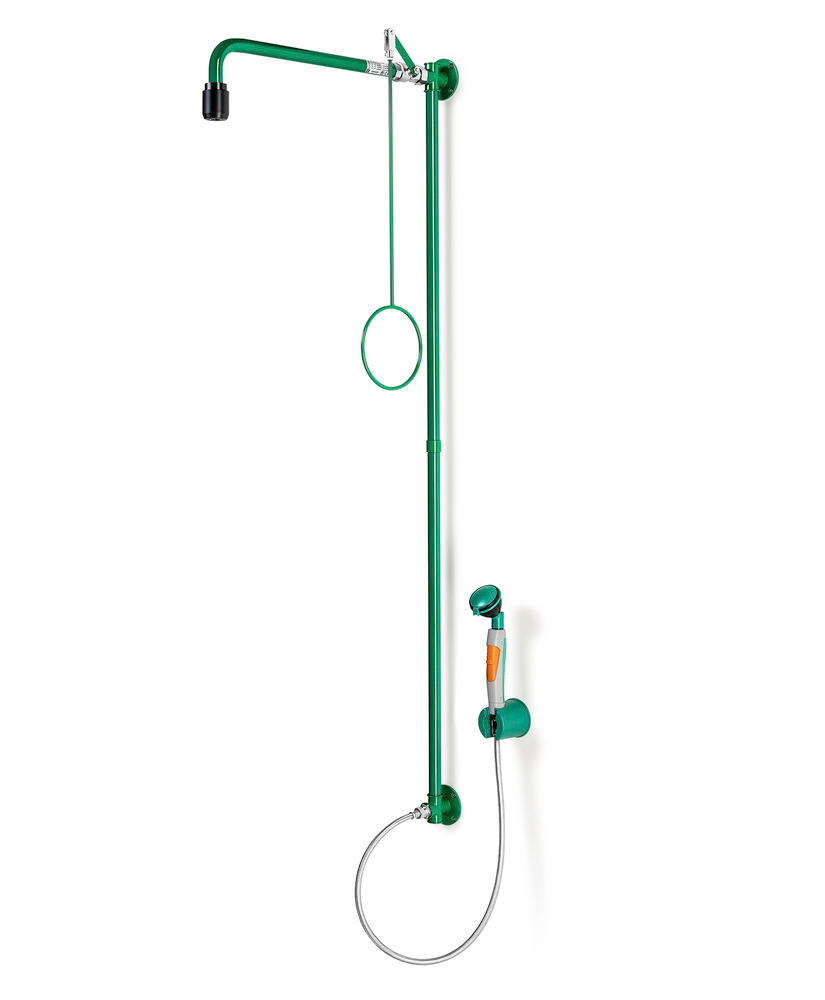
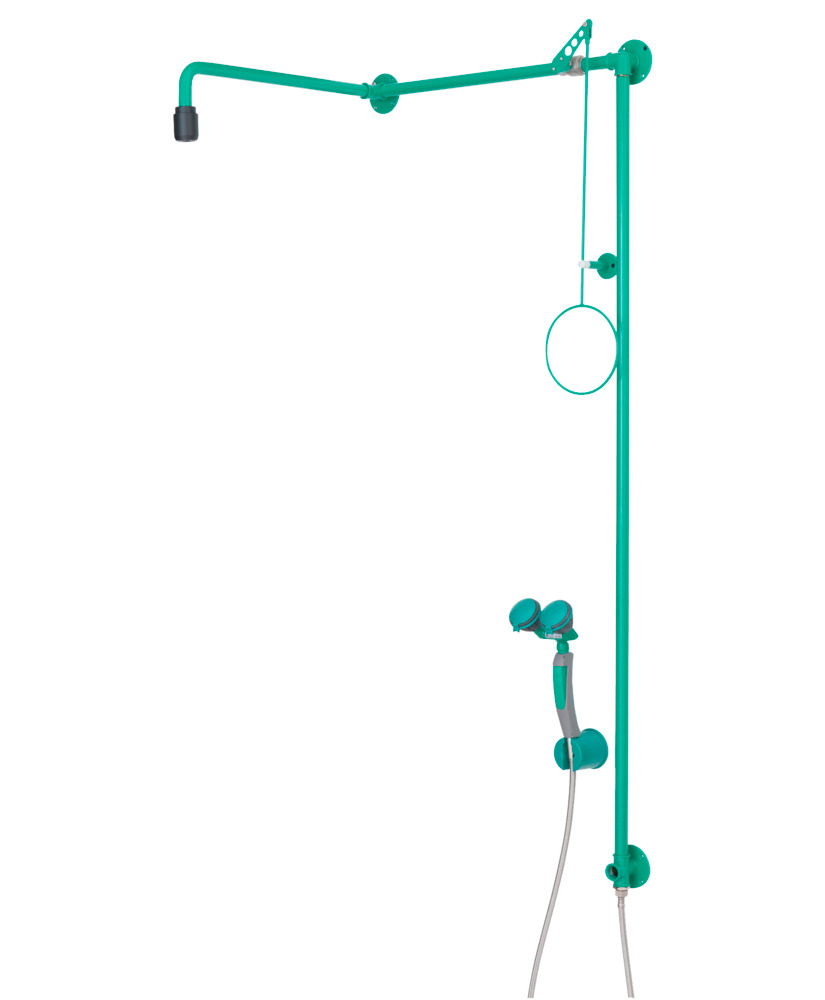
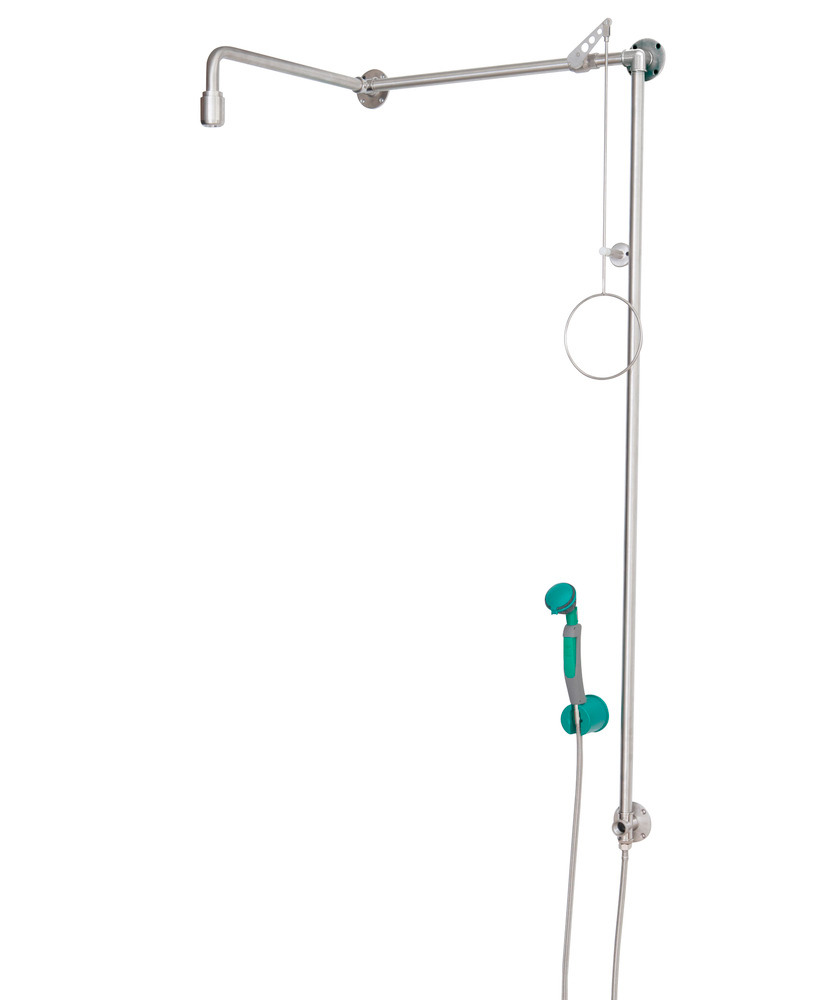
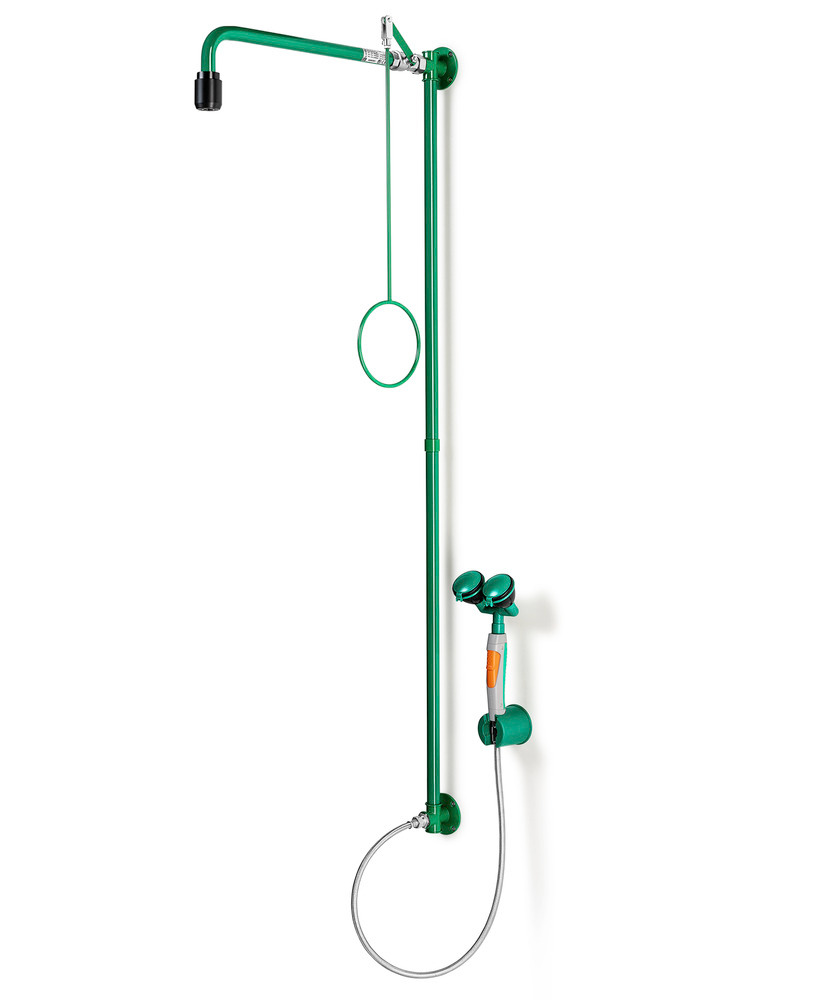
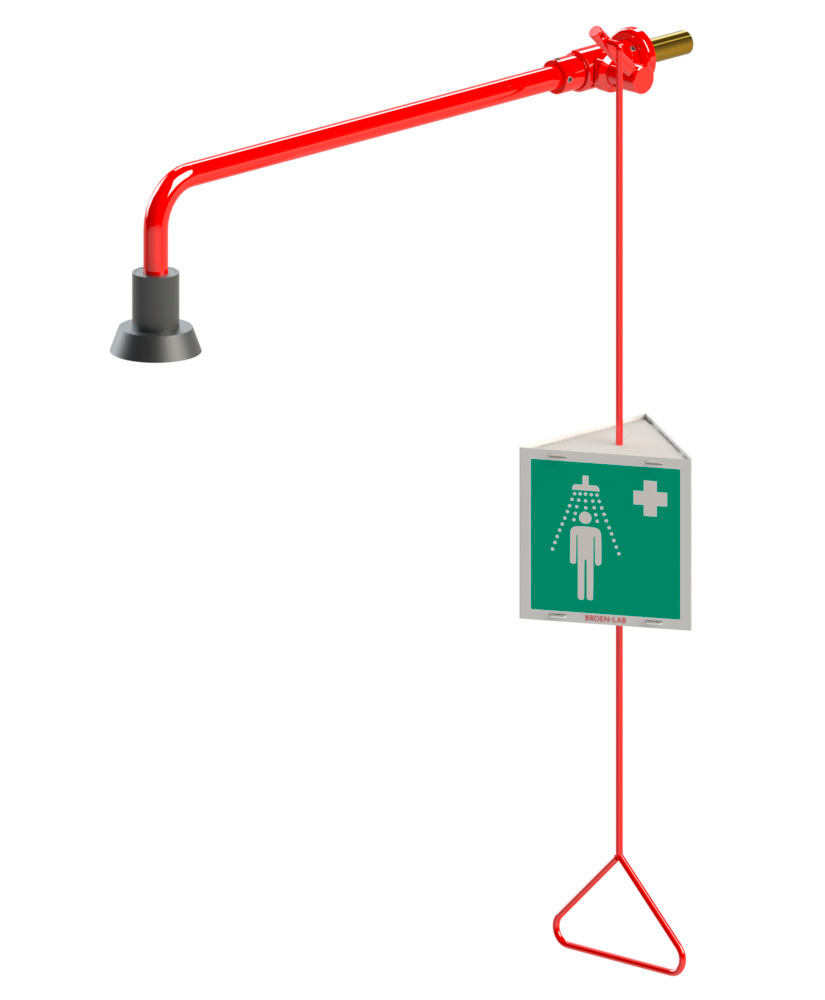
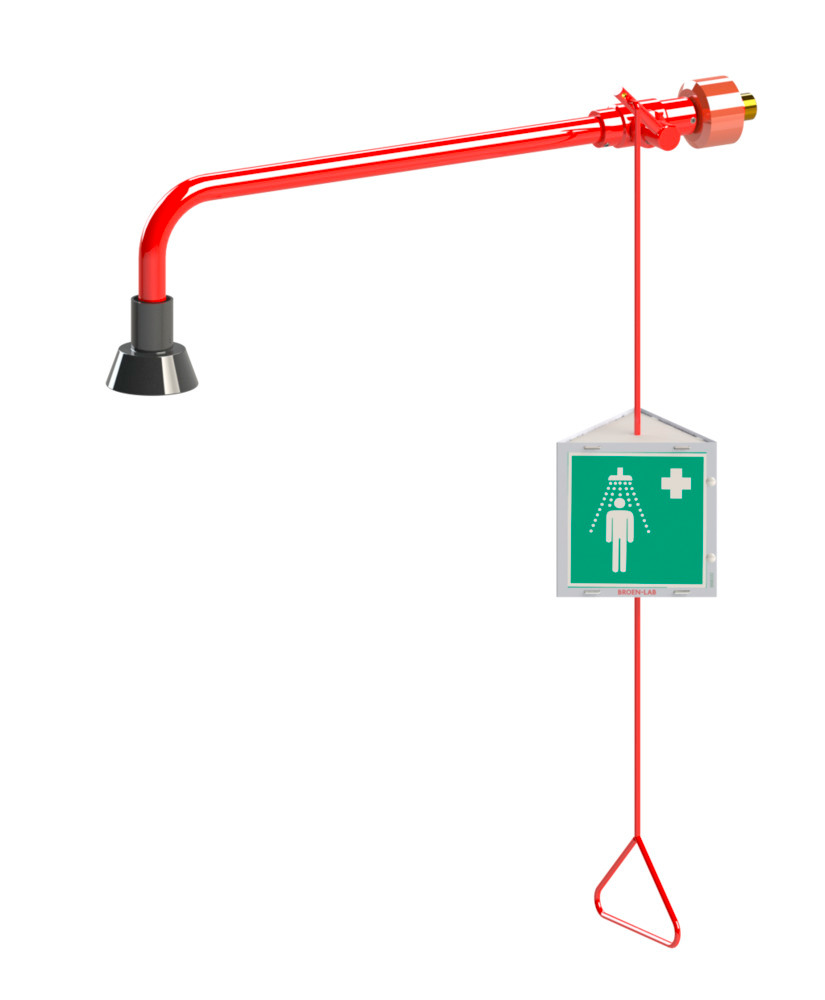

Emergency showers and body showers from DENIOS

Why emergency showers are essential
Workplaces that involve chemicals, solvents, or other dangerous substances carry a constant risk of accidental exposure. When someone gets exposed to dangerous substances, an emergency shower can save them from serious, long-term injury by washing contaminants off their skin and out of their eyes immediately.
Emergency showers can also be used to extinguish clothing fires and cool burns. Having immediately accessible equipment reassures employees that immediate first aid is available if needed.

What types of emergency showers are there?
Workplaces vary, and so do their safety requirements. DENIOS provides several types of showers, including:
Wall-mounted and ceiling-mounted showers: Compact and efficient for laboratories, production areas, and other indoor spaces with limited room.
Freestanding and over-door showers: Strong, floor-mounted designs that provide maximum accessibility in large facilities.
Tank-based and mobile showers: Designed for remote locations or areas without a plumbed water supply. These units ensure safety wherever required.
Combination showers with eye wash stations: Models that deliver protection for both the body and eyes.
Frost-proof and outdoor-ready showers: Heated and insulated units that offer reliability even in freezing conditions.
If you’re fitting a drench shower, pair it with an eye wash station to cover both full-body and eye-level risks.


Key features of DENIOS showers
High-performance shower heads deliver full coverage and consistent water flow.
Simple activation mechanisms with pull-rods and pressure plates for fast response times in emergencies.
Dust caps keep nozzles clean and ready for immediate use.
Rubber sleeves provide impact protection and added safety.
Durable ball valves designed for long-term reliability.
Robust and space-saving construction suited to demanding industrial environments.
Chemical resistant coatings ensure longevity and protection against corrosive substances.

What are the regulations by law?
Employers have a legal duty of care under workplace safety law. This includes ensuring that staff have access to effective emergency decontamination equipment.
EN 15154 compliance: All DENIOS showers meet the European Standard EN 15154, which defines performance, flow rate, temperature, and construction.
Employer responsibilities: Providing showers demonstrates a commitment to safety and helps meet strict regulatory requirements.
Tepid water supply: Units must deliver water between 15–37°C for at least 15 minutes to prevent thermal shock.
Installing an emergency shower
Emergency showers should be installed as close as possible to areas where hazardous substances are handled. To meet safety standards, they must be reachable within 10 seconds (approximately 15–20 metres) of a potential hazard.
DENIOS offers various configurations, including free-standing floor-mounted units, wall-mounted, ceiling-mounted and over-door options. This ensures that workplaces of all sizes and layouts can maintain clear, unimpeded access in an emergency.
For outdoor or cold environments, a frost-proof emergency shower is essential. These are insulated and often electrically heated to prevent freezing, in order to guarantee reliable year-round performance. When installing any unit, consider visibility, signage, water supply and drainage. The path to the shower must be free of obstructions, well-lit and clearly marked, so it can be located instantly.
How often do body showers need to be checked?
All emergency showers should be serviced and cleaned on a regular schedule – generally at least once every six months for a full maintenance service.
In addition, functional checks must be carried out more frequently to ensure the unit is always ready to perform. It is recommended to test each safety shower monthly (or according to the manufacturer’s guidelines) by briefly activating it to verify proper water flow and operation.
Regular monthly testing helps identify any problems (like clogged nozzles or valve issues) early, so they can be fixed promptly. By keeping to a consistent maintenance routine, you can be confident that your emergency shower will work correctly whenever it is most needed.
Knowledge about the topic
The specialist information on this page has been compiled carefully and to the best of our knowledge and belief. Nevertheless, DENIOS Ltd cannot assume any warranty or liability of any kind, whether in contract, tort or otherwise, for the topicality, completeness and correctness either towards the reader or towards third parties. The use of the information and content for your own or third party purposes is therefore at your own risk. In any case, please observe the locally and currently applicable legislation.