
Chemical Storage Containers
(9 Article in 34 versions)DENIOS offers a wide range of products and technical solutions for the safe storage of hazardous materials, including chemical storage containers. Specialised storage systems are available, and innovative equipment makes the management of hazardous materials safer and more efficient.
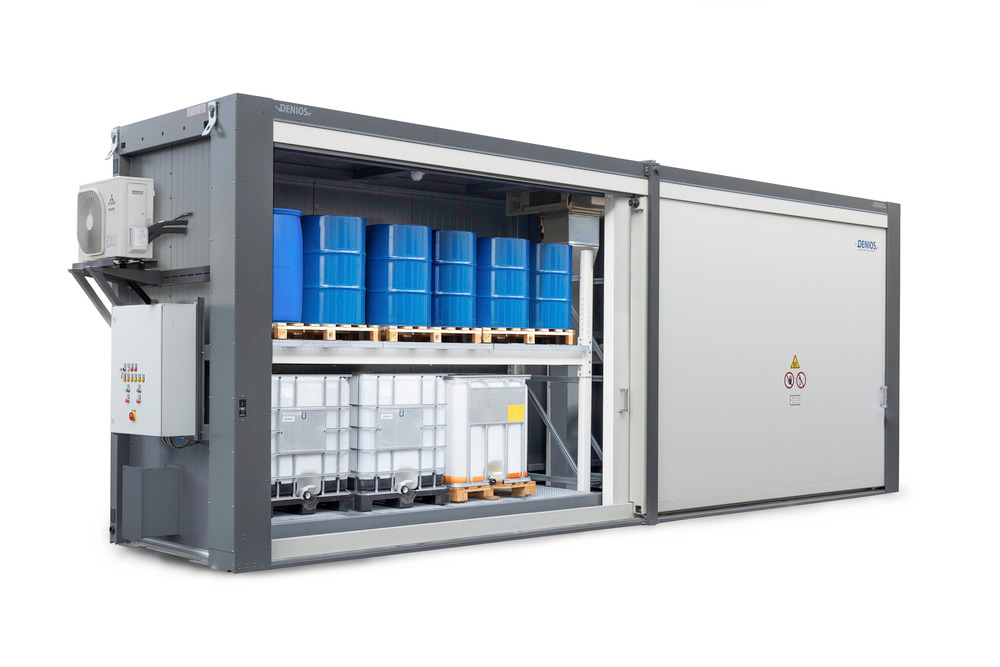
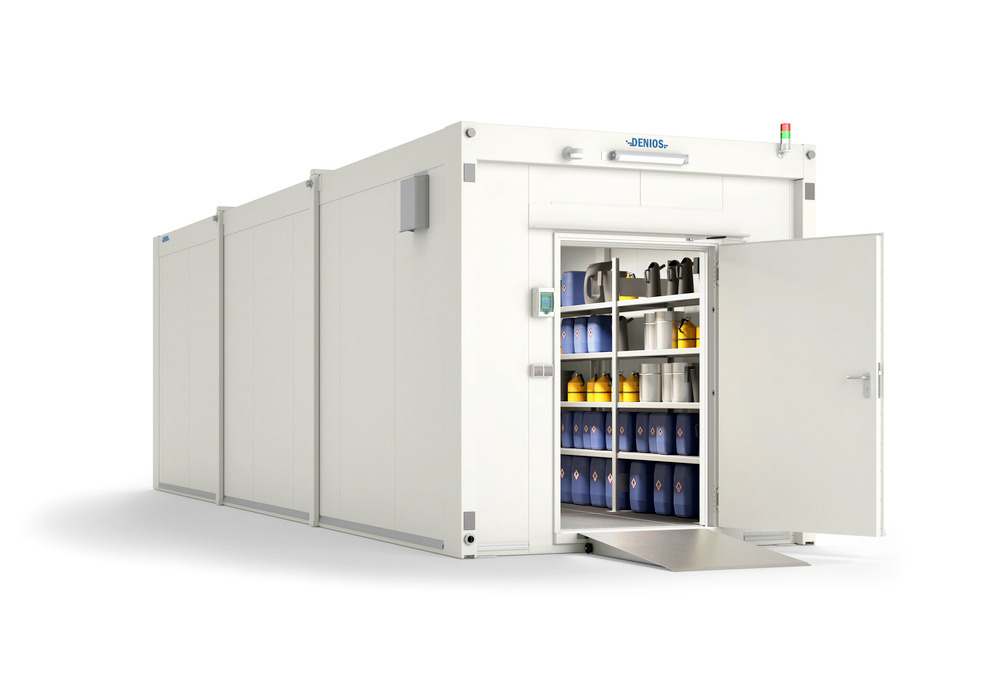
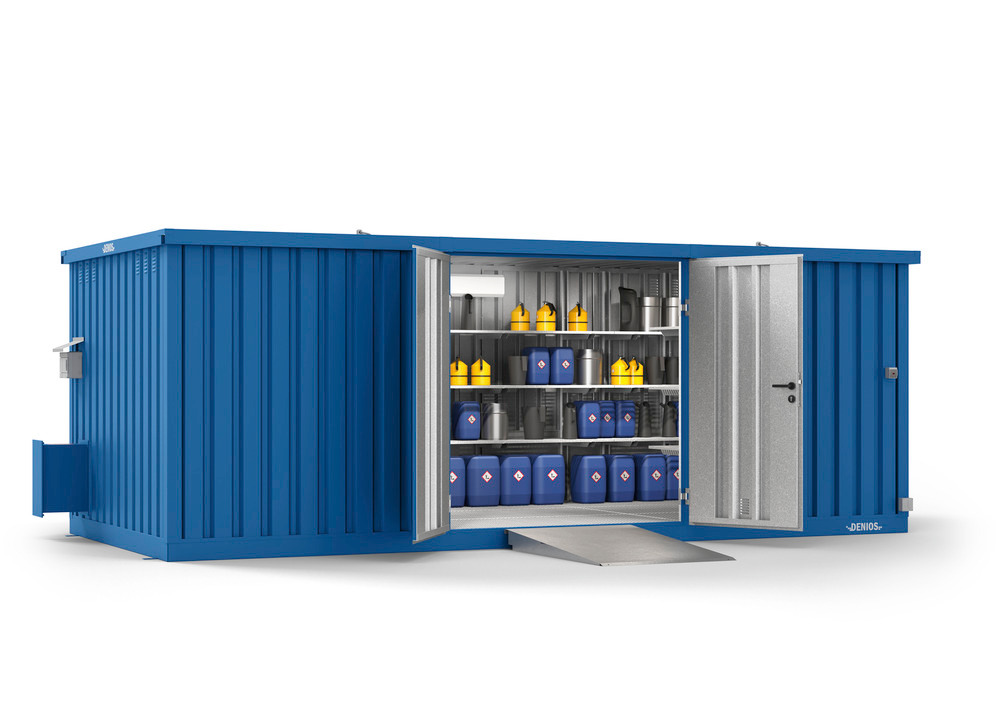
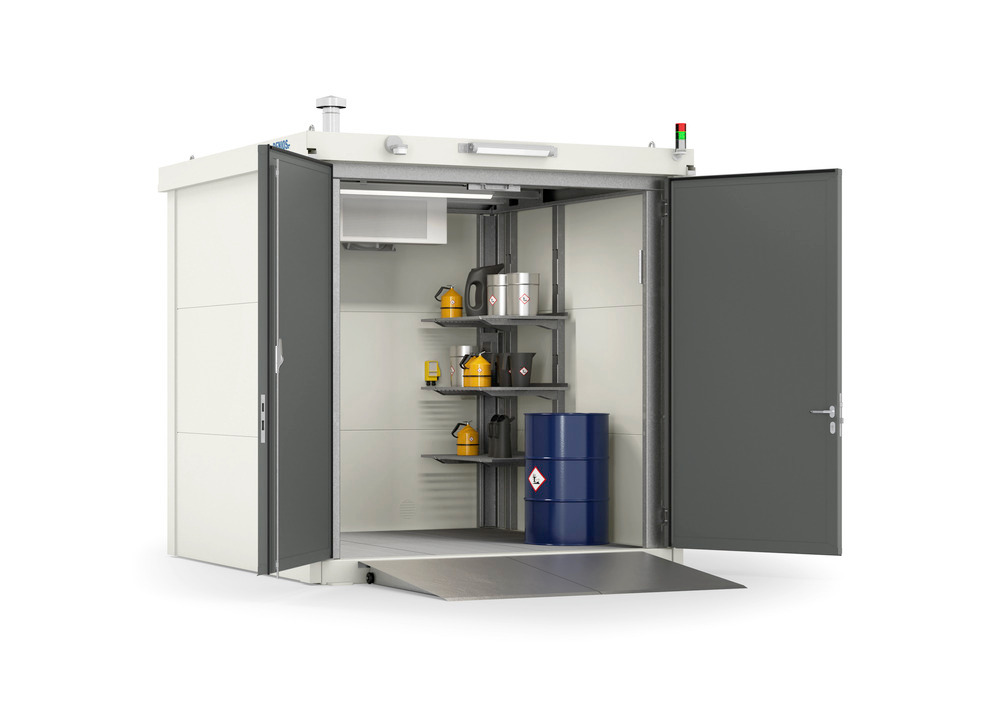
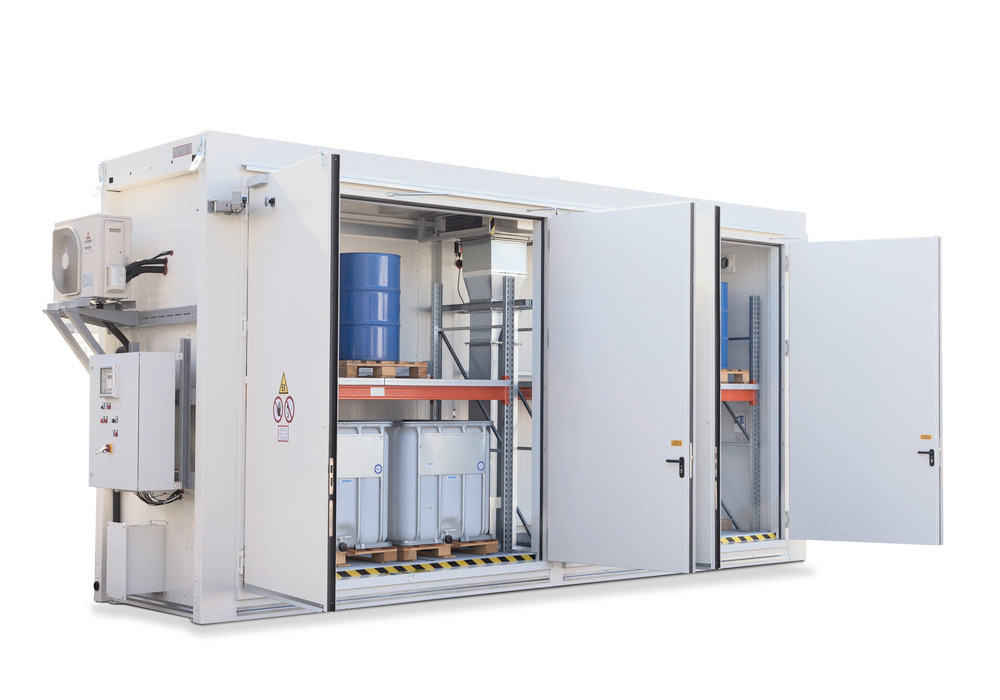
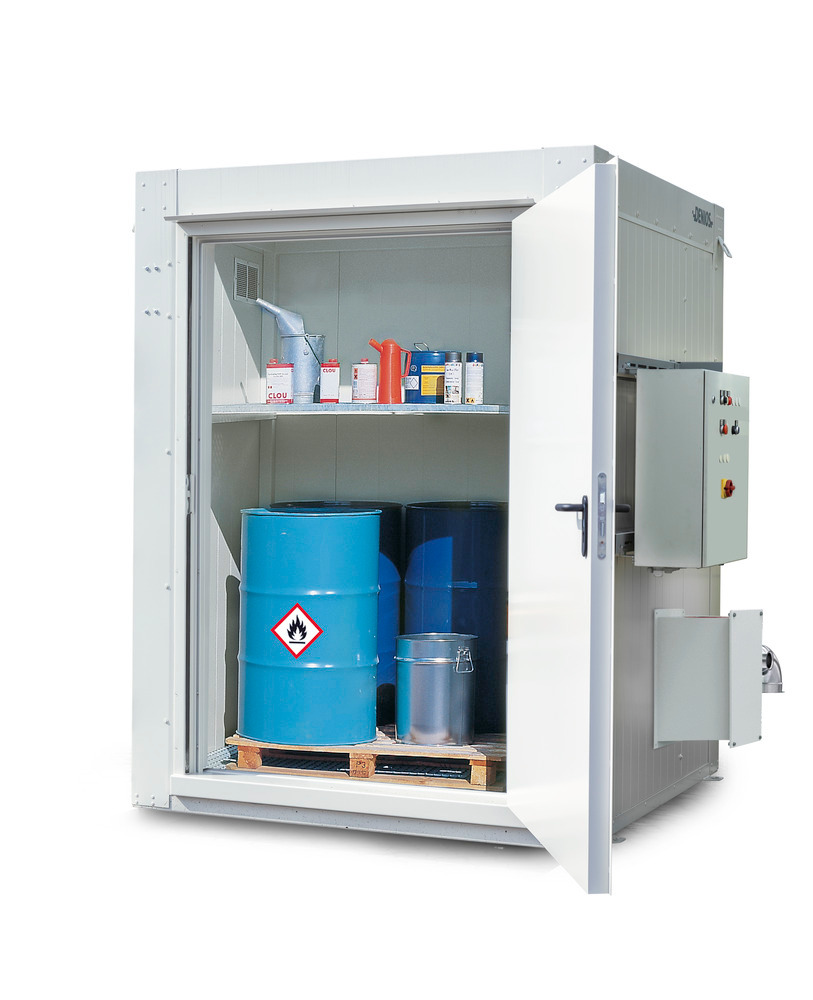
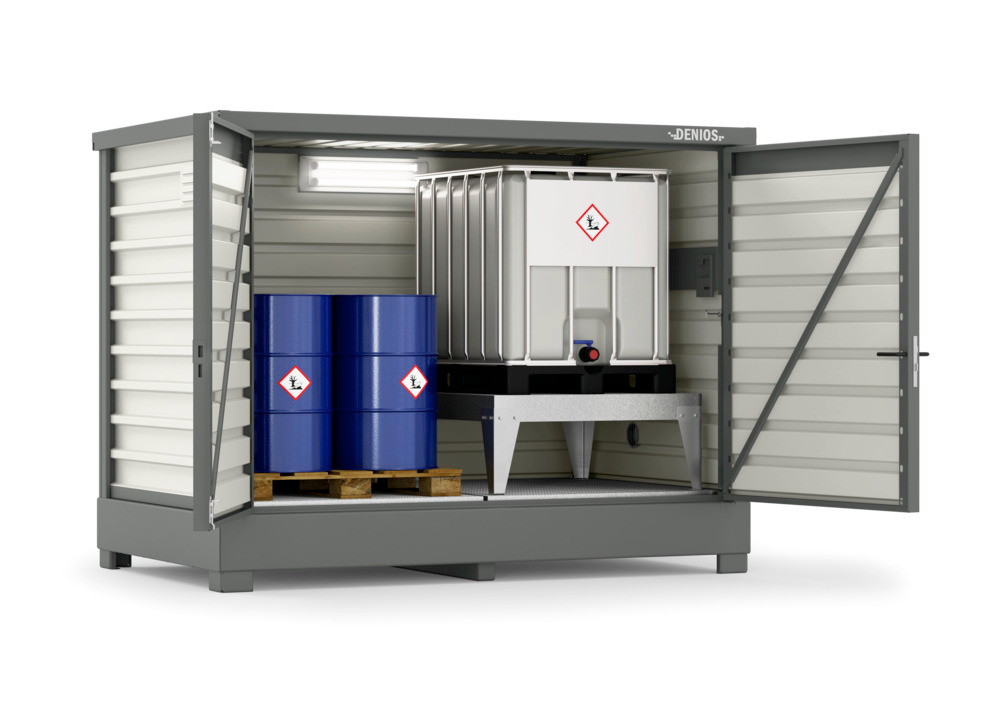
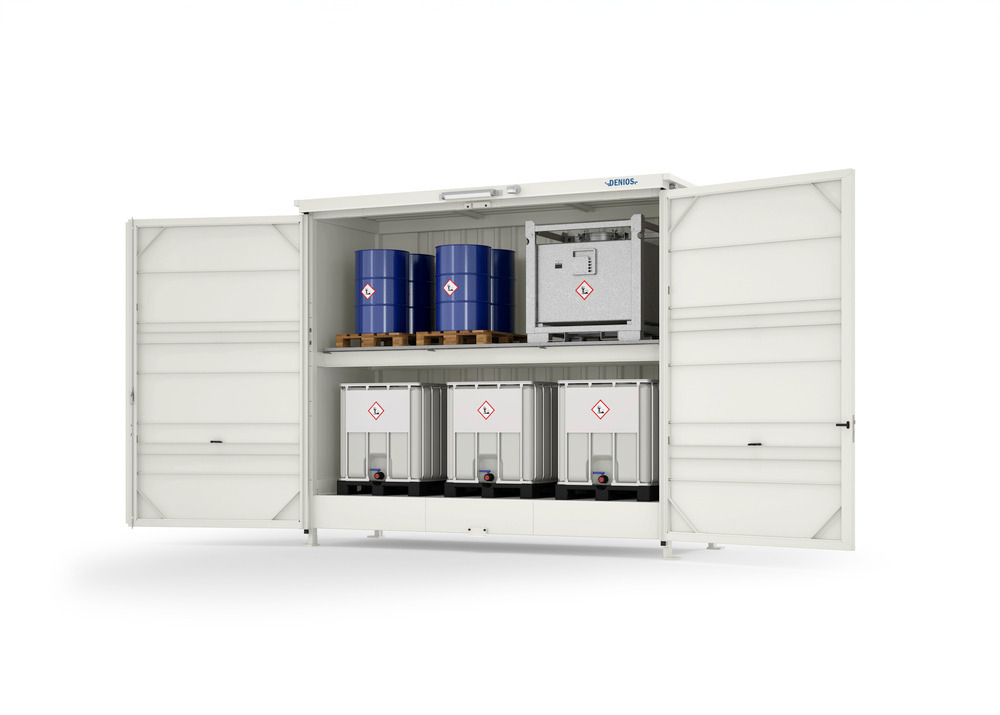
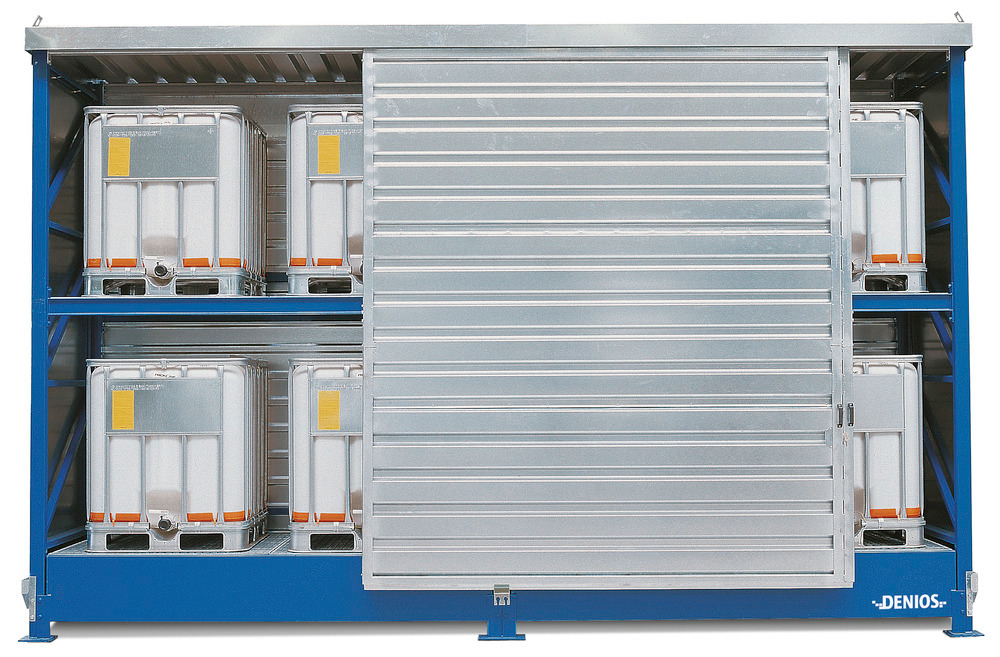

Chemical storage containers from DENIOS
Why must hazardous materials be stored in chemical containers?
The storage of chemicals and hazardous materials in special containers is an important part of a comprehensive safety management system, which aims to minimise risk and ensure the safety of people and the environment.
Accident prevention: Hazardous materials can be potentially dangerous and cause accidents such as fires, explosions or chemical reactions. Storage in special containers significantly reduces the risk of such accidents by creating a barrier between hazardous materials and the environment.
Prevention of water and environmental pollution: Hazardous chemicals can seriously pollute the environment if released. Chemical containers are designed to prevent leaks of hazardous materials, helping to minimise damage to the environment.
Health protection: Some hazardous materials can be toxic, corrosive or carcinogenic and pose a risk to human health if inhaled, ingested or in contact with the skin. Storage in chemical containers equipped with special safety features, such as access restrictions and ventilation, reduces the risk of exposure to these hazardous materials for employees and the general public.
Regulatory compliance: Many countries have strict regulations and standards governing the storage and handling of hazardous materials and chemicals. The use of chemical storage containers that comply with these regulations is necessary to meet legal requirements and avoid potential legal consequences.

Application areas for DENIOS chemical storage containers
DENIOS chemical storage containers are typically used when:
hazardous liquids or solids, pressurised gas cylinders or aerosol containers must be stored
hazardous materials are stored in barrels and IBC containers, or the quantity of substances stored exceeds the capacity of safety cabinets (<200 kg)
Hazardous materials are to be stored outdoors.
Hazardous materials are to be stored within a specific temperature range that does not correspond to the ambient temperature (e.g. storage in frost-free conditions, storage of organic peroxides).

Advantages of using chemical storage containers
Chemical storage containers offer many advantages for the safe storage of hazardous materials:
Transportability: Chemical storage containers are easy to transport and can be flexibly positioned at various locations. The installation conditions, in particular with regard to ground foundations and connections, as well as the maintenance of safe distances, must be taken into account.
Safety: These containers, which are specially designed for the storage of hazardous substances, meet the strict requirements of the Occupational Safety Regulation, the Hazardous Substances Regulation and public building law.
Modularity: Thanks to their modular design, chemical storage containers can be easily adapted, enlarged, or reduced in size as required.
Scalability: Companies can easily adapt their storage capacity by adding more containers. However, they cannot be stacked.
Flexibility: Chemical containers can be adapted to store a variety of substances, including water-hazardous and flammable liquids.

Chemical storage containers of various capacities
DENIOS offers a wide range of chemical storage containers with different storage capacities. The storage capacity required (small containers/drums/IBCs) determines the basic form of the hazardous materials storage facility (walk-in/shelf/compact).

Walk-in chemical storage containers
If you want to store large quantities of small packages, a walk-in chemical storage container is the optimal solution. The entrance height is only 150 mm, which can be easily overcome with a ramp, even when using a hand truck or lift. Built-in shelves allow for convenient and clear arrangement.

Chemical storage container in shelving construction
If you need to store larger quantities of hazardous materials on Euro/chemical pallets, in barrels or IBC containers, a racking or shelving system is the best choice. The dimensions of the shelves and the load capacity are optimally adapted to the size of the goods stored. Drive-in racking systems allow loading with a hand pallet truck.

Compact chemical storage containers
Due to its low space requirements, a compact chemical storage facility is often located close to the production site or workplace. It provides direct access to IBCs, drums or small containers and can also be used as a filling or transfer station.

Customised solutions
DENIOS also offers customised storage solutions tailored specifically to the customer's needs and requirements.
Do DENIOS chemical storage containers comply with applicable regulations?
Yes, DENIOS chemical storage containers are designed, manufactured and tested in accordance with relevant national and international standards, ensuring that they comply with applicable regulations and standards. As a renowned supplier of products and solutions for the safe storage and handling of hazardous materials, we are familiar with local regulations for the storage of hazardous materials in Europe, North America and China. With 25 locations worldwide, our local experts record the specific regulations and standards applicable in each region and take them into account when designing containers for hazardous materials.
What should you pay attention to when planning a chemical storage container?
The design of chemical storage containers requires a thorough analysis of specific requirements and hazards to ensure safe and compliant storage. It is advisable to seek the assistance of specialists or companies such as DENIOS, which have experience in the design and manufacture of chemical storage containers, to ensure that all relevant aspects are taken into account.

Whitepaper "Planning a hazmat storage container"
Instructions with checklist for safe planning (incl. 6 typical planning mistakes)
In this free DENIOS whitepaper you will learn:
when a hazardous materials storage facility cannot be put into operation
how you can gain planning security - everything from a single source
6 typical planning mistakes
important planning factors, which are queried using a checklist
Operational requirements for chemical storage containers
When operating a chemical storage container, it is important that operators and users are trained and familiar with the applicable regulations. Storage should be in accordance with the hazard classes of the substances, in accordance with the applicable regulations on joint storage, and should be equipped with appropriate safety measures. Clear labelling and documentation of hazardous materials is essential. Regular inspections and maintenance are important for detecting and eliminating potential hazards. An emergency plan should be developed and reviewed regularly so that an appropriate response can be made in the event of an accident.
In our free report on ‘Operating hazardous materials stores safely’, you will learn about the challenges you face in the daily operation of a hazardous materials storage facility.